

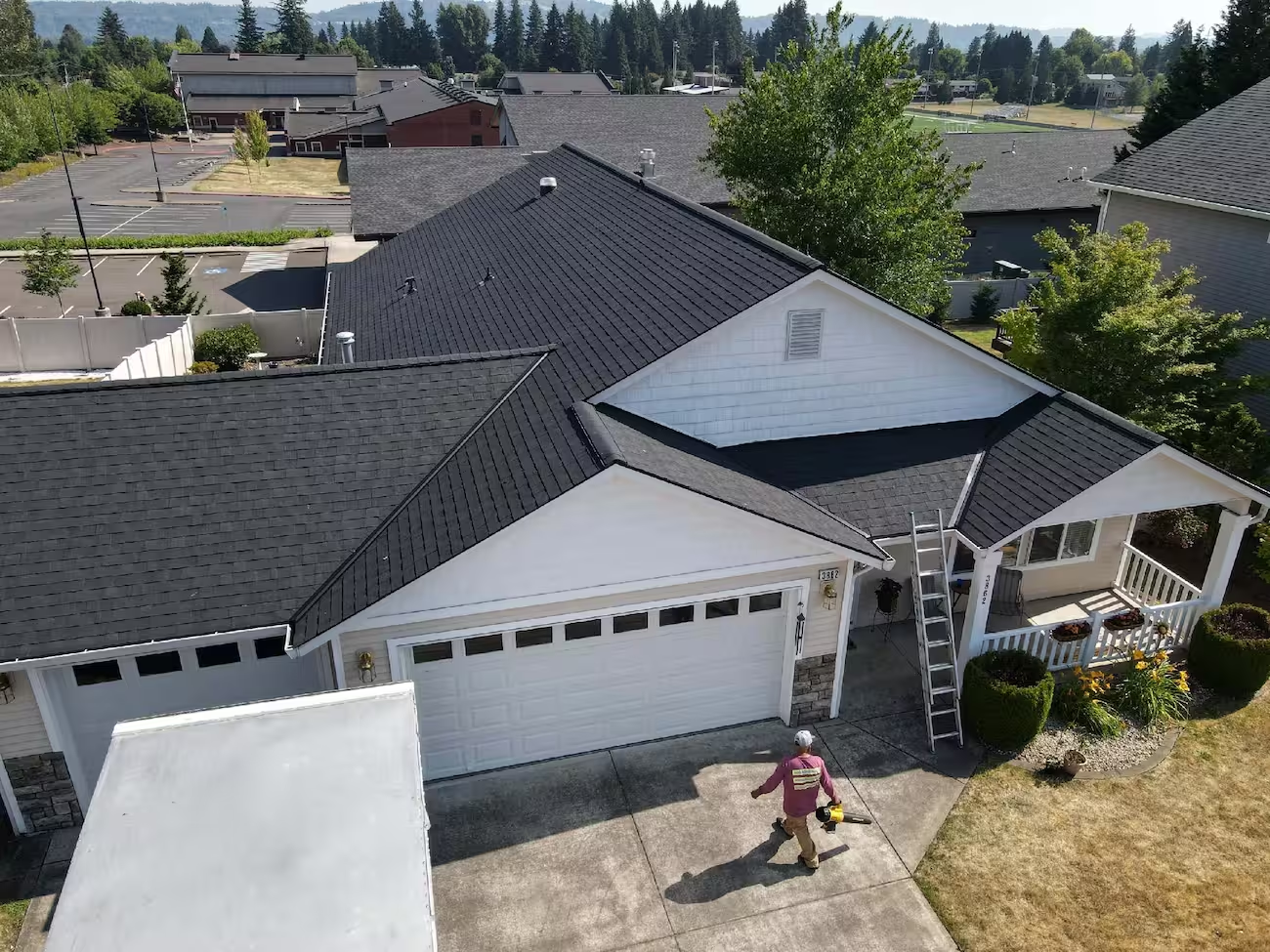
Waiting for three consecutive weeks of clear skies in the Willamette Valley can delay critical home improvements indefinitely. In the Portland metropolitan area, steady rain and persistent coastal fog dominate from October through May. When exterior cladding fails—whether through cracked composite boards, loose panels, or dry rot—homeowners frequently ask whether they can safely replace siding during Oregon’s rainy season or if they must wait for summer heat.
The direct answer is yes. Siding replacement can proceed safely throughout the Pacific Northwest wet months when managed with strict weather-protection protocols. In fact, delaying an exterior renovation when your wall assembly is actively compromised allows moisture to travel deeper into wall cavities, ruining fiberglass insulation and rotting structural framing studs.
Exteriors West LLC brings more than a decade of exterior construction experience to homes across Portland, Beaverton, Lake Oswego, and surrounding communities. By applying phased tear-offs, commercial-grade weather barriers, and rainscreen drainage planes, our crews replace failing siding while keeping your home watertight from start to finish.
Rainy-Season Siding Replacement: Controlled Protocols vs. High-Risk Methods
| Project Phase | Standard Dry-Weather Practice | Controlled Wet-Weather Protocol | Pacific Northwest Moisture Protection |
| Demolition | Stripping entire elevations at once | Stripping controlled, single-day sections | Prevents exposed, unsealed sheathing during rain |
| Substrate Evaluation | Visual checks on dry plywood | Moisture-meter testing of OSB/plywood | Replaces soft wood; ensures framing is under 18% moisture |
| Weather Barrier (WRB) | Standard flat housewrap | Commercial vapor-permeable membrane | Blocks liquid water while letting indoor water vapor escape |
| Wall Flashing | Standard surface z-flashing | Self-adhered membrane & sloped sill pans | Directs wind-driven rain outward across rough openings |
| Drainage System | Direct cladding attachment | Back-vented rainscreen furring strips | Creates a capillary break to drain trapped moisture fast |
Controlled Staging: How Contractors Build in the Rain
A successful wet-weather project comes down to staging. An inexperienced crew might strip an entire house down to bare plywood on a Monday, leaving the structure exposed to overnight downpours. Professional contractors follow precise management steps:
1. Sectional Tear-Offs
Crews remove old cladding only on wall sections that can be inspected, repaired, and dried in with a weather-resistive barrier (WRB) on the same working day. The house is never left stripped to bare wood overnight.
2. Immediate Dry-In Protocols
As soon as old siding is removed and sheathing repairs are completed, workers install heavy-duty, commercial-grade housewrap. Seams are sealed with specialized acrylic flashing tape engineered to bond aggressively even in damp conditions, creating a secondary water-shedding shield before siding panels ever go up.
3. Monitoring Atmospheric Windows
While crews can work under light showers or mist with temporary tarp canopies, high-wind storm fronts or freezing cold snaps require scheduled pauses. Planning your project with an experienced team provides the schedule flexibility needed to maintain strict quality standards.
What Lies Beneath: Finding Hidden Dry Rot Before Summer
Waiting until July to address cracked or swollen siding often magnifies repair costs. When you choose to replace siding during Oregon’s rainy season, opening the wall cavity reveals hidden vulnerabilities before another 30 inches of winter precipitation causes structural decay.
During demolition, technicians routinely uncover:
- Saturated Plywood or OSB Sheathing: Soft, discolored panels that have lost structural shear strength.
- Framing Stud Dry Rot: Fungal growth actively degrading wall plates, sill plates, and framing studs.
- Corroded Fasteners: Rusted nails and structural clips caused by long-term moisture leaks.
- Failed Window Flashing: Water tracking beneath window frames from missing corner patches.
Through our dedicated siding replacement services, damaged structural sheathing is cut away, framing studs are reinforced, and surrounding materials are dried before new cladding is secured.
The Complete Building Envelope: Integrating Walls, Roofs & Gutters
Siding cannot keep a house dry on its own. It functions as part of a complete exterior envelope. Water running down an exterior wall often originates higher up on the structure:
- Roof-to-Wall Intersections: Where lower rooflines butt against two-story siding, missing kickout flashing dumps gallons of water directly behind the siding. If your roofline is failing alongside your wall cladding, we evaluate whether targeted roof repair or a complete roof installation is needed to stop water at the top of the wall. Homeowners can also review our residential roof repair options for smaller leak fixes.
- Roof Drainage Systems: Clogged or undersized gutters overflow, soaking siding boards, corner trim, and fascia. Installing seamless troughs through our gutter installation team or correcting pitch via gutter repair keeps roof runoff away from exterior walls.
- Window Transitions: Siding meets fenestration at every window opening. Coordinating your siding work with our specialized window installation team ensures flashing tape, sloped sill pans, and drip caps overlap properly.
- Deck Ledgers: Poorly flashed deck connections rot rim joists. When updating siding, integrating your outdoor structures through our decking and fence services ensures ledger boards are waterproofed.
- Commercial Applications: For business owners and multifamily managers, our commercial roofing division provides envelope assessments across Clark and Multnomah counties.
Best Cladding Materials for Portland’s Damp Climate
Choosing the right material is essential when planning to replace siding during Oregon’s rainy season:
- Fiber Cement (James Hardie): Engineered specifically for humid, wet climates by James Hardie, fiber cement does not rot, swell, warp, or support fungal growth. Installed over a back-vented rainscreen cavity, it provides exceptional durability against Willamette Valley moisture.
- Western Red Cedar: While naturally rot-resistant, cedar requires regular maintenance and protective finishes. Factory-primed cedar can be installed in cooler months, followed by professional exterior painting when temperatures and humidity levels stabilize in spring.
- Engineered Wood: Treated with zinc borate and water-resistant waxes to inhibit fungal decay. Like any wood-based material, end cuts must be thoroughly primed and sealed during winter installation.
In modern building science, creating an air gap between the housewrap and the back of the siding (a rainscreen system) is critical. As documented by the Building Science Corporation, rainscreens break capillary draw, allow gravity drainage of wind-driven rain, and promote continuous convective drying.
Navigating Portland Permits & Neighborhood Microclimates
Permits and neighborhood topography shape exterior renovation planning across Portland:
- Permitting Requirements: Simple in-kind residential siding repairs generally do not require building permits. However, replacing structural wall sheathing or executing major alterations triggers plan review through Portland Permitting & Development. Homes in designated historic conservation zones (such as Irvington or Ladd’s Addition) require design compatibility reviews.
- West Hills & Forest Park: Properties situated along steep, heavily wooded terrain experience persistent shade, high humidity, and slow daily drying cycles. Rainscreens and algae-resistant finishes are vital.
- Mount Tabor & East Portland: Homes on elevated terraces deal with stronger wind-driven rainfall blowing in from the Columbia River Gorge, requiring reinforced corner flashing and wind-resistant fastening patterns.
To explore real-world examples of our wet-weather exterior work, browse our recent project portfolio.
Frequently Asked Questions
Can you replace siding during Oregon’s rainy season if it is actively drizzling?
Yes. Professional crews utilize temporary tarp awnings and work in controlled sections. Demolition and dry-in steps are sequenced so bare plywood sheathing is never left exposed to direct downpours.
What happens if dry rot is discovered behind my siding during winter?
When soft or rotted sheathing is uncovered, work pauses on that specific section to remove the damaged wood, treat surrounding framing with antimicrobial agents, and install new plywood before the weather barrier is applied.
Will cold weather affect my manufacturer warranties?
Leading manufacturers like James Hardie approve cold-weather installation down to freezing temperatures, provided the correct fasteners and flashing tapes are used. Finish caulking and exterior paint coats require specific ambient temperatures and are scheduled accordingly.
Is it cheaper to replace siding in the winter?
Contractor schedules are typically more open between November and March compared to the busy summer peak, often allowing for faster start dates and focused project timelines.
Schedule Your Exterior Inspection Today
Don’t let water compromise your home’s structural framing for another winter. Contact Exteriors West today to schedule a detailed on-site assessment and discover how simple it can be to replace siding during Oregon’s rainy season.

Leave a Reply