

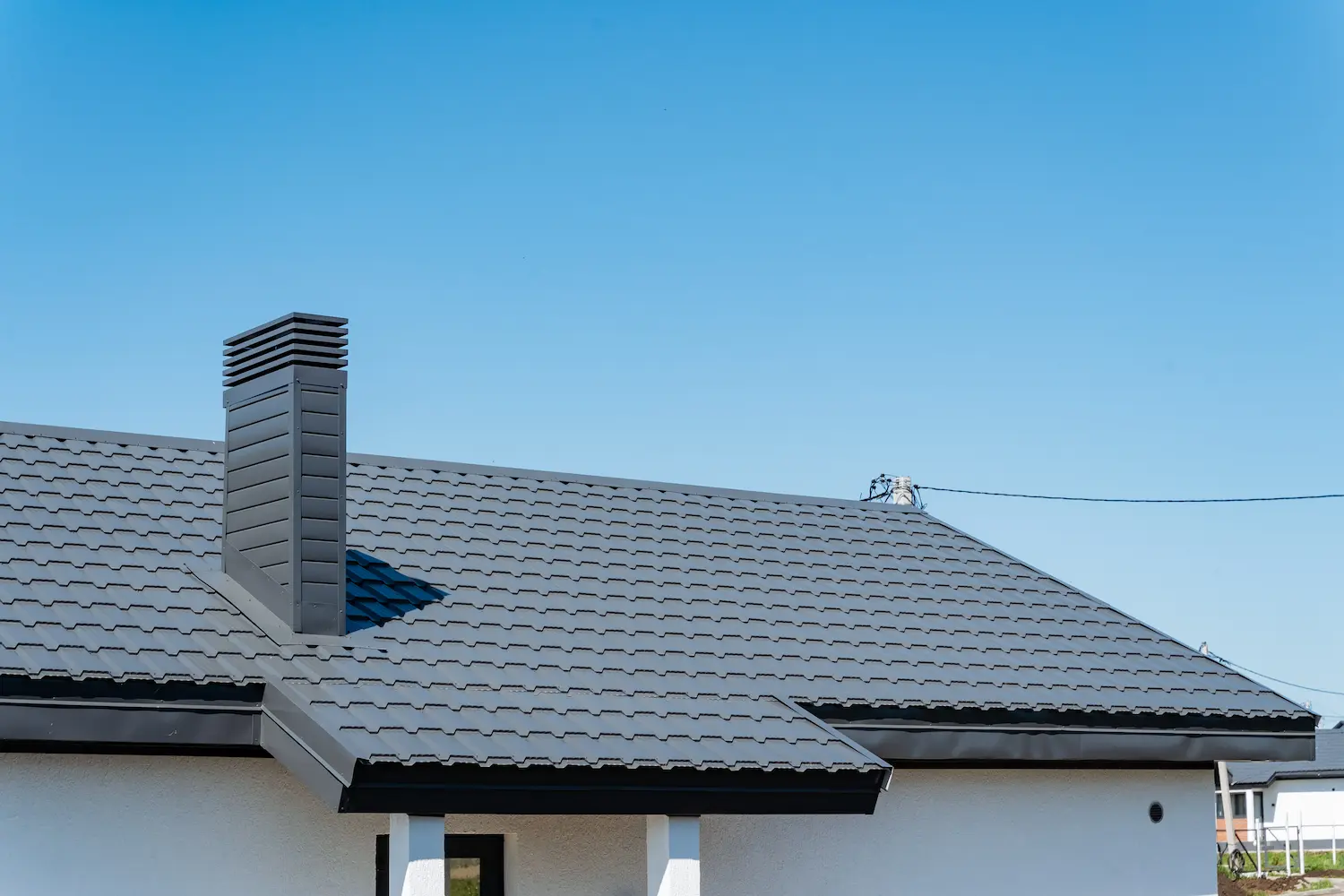
People who own their homes in the Pacific Northwest have a special problem when they need to decide about the roof, especially when considering Asphalt vs. Metal Roofing. Because the area has several months of continuous rain, very high humidity, moss growing everywhere, and chemically limited dry seasons, most roof materials that are not resistant to moisture get damaged early. This includes both Asphalt vs. Metal Roofing, which must be considered in this wet climate. The roof selection goes beyond just the type of house façade; it’s also a matter of choosing the material that will last the longest in such a moisture-heavy and damp climate.
One of the things we do from time to time at Exteriors West is to help homeowners in Vancouver, WA and nearby locations to properly assess the differences between Asphalt vs. Metal Roofing and how these different types of roof materials perform under real outdoor conditions, as opposed to what the advertisements say. Among the few roofing types people inquire about us most frequently are asphalt shingles and metal roofing. Both these options are loved by many, but also have their unique advantages. However, when comparing Asphalt vs. Metal Roofing, it’s crucial to understand the very different results they can yield after prolonged exposure to moisture.
In the aftermath, which roofing material has better resistance to PNW weather? Keep reading to find out some more details.
When evaluating Asphalt vs. Metal Roofing, homeowners often question which material provides better longevity and resistance to moisture in the Pacific Northwest.
What Makes PNW Roofs Exceptional?
Asphalt vs. Metal Roofing becomes an essential topic when analyzing long-term performance in this unique climate.
Understanding how Asphalt vs. Metal Roofing performs in areas with heavy rainfall is vital for making an informed decision.
It is advisable to have a clear reason why roofing in the PNW is different from roofing in drier or colder regions before one starts to compare different types of roofing materials, specifically Asphalt vs. Metal Roofing. One can say that Southwest Washington is a typical region with a very long rainy season, lots of cloudy days and less variation in temperature. On the other hand, heavier snow loads are not usually the main concern, however, the constant moisture really is.
Some of the factors that are nutritious for a roof in the area, which are critical when evaluating Asphalt vs. Metal Roofing, include:
- Rain and mist are almost always there.
- Drying is hindered by the fact that the air is so humid.
- There is plenty of natural litter from the walk-in, overhanging trees.
- There is growing moss, algae, and lichen.
- The temperature fluctuations are significant and the cycles of freezing and thawing are quite frequent. Asphalt vs. Metal Roofing Asphalt vs. Metal Roofing Asphalt vs. Metal Roofing
It is clear that any type of roofing system put in place here should be highly effective in repelling water, without allowing moisture to stay inside the structure and it should also be able to withstand the damage caused by the growth of living things on it. This is a central point in the Asphalt vs. Metal Roofing debate. Going by the performance of the products in dry areas, or deserts, it is pretty obvious it is unlikely they would survive here if they are not very good at shedding water or if they deteriorate quickly on being exposed to moisture.
Asphalt Shingles and How They Cope in the Asphalt vs. Metal Roofing Context
The primary reason why asphalt shingles continue to be the most popular roofing material among homeowners in the US is undoubtedly merit. Besides being reasonably priced and available almost everywhere, they also provide a look which still suits most areas of Vancouver and Clark County, often making them the default choice in an Asphalt vs. Metal Roofing comparison.
The key argument in the Asphalt vs. Metal Roofing debate is how each material handles the constant moisture present in the Pacific Northwest.
How Do Asphalt Shingles Deal with Moisture?
The water resistance of asphalt shingles, among others, is one of the features of the latest technology in the manufacturing of these products. Strictly speaking, however, the water resistance of asphalt shingles is not equal to the waterproofness of a metal roof, which is a key distinction in Asphalt vs. Metal Roofing analysis.
The way in which an asphalt shingle roof sheds water is basically a gravitational one and it is down to the fact that the shingles are overlapped. When the roof is installed correctly, of course, it will keep the inside free of dampness from the rain for some time. The point is, the incessant presence of water is not without some sort of effect on the roofing material over an extended period.
As a result of the high levels of moisture in the air and the temperature that is just right for it, fungi can flourish on almost any surface in the Pacific Northwest. To exacerbate the situation further, when there is shade provided by the trees, it can still get damp underneath the shingles.
This is just the place where organic matters start to grow. Over a while moss, which is one of the organisms, can indeed raise the shingles so much that water will be able to get through the cracks and leak onto the wooden structure of the roof that is being protected by the shingle surface. This susceptibility is a major factor when weighing Asphalt vs. Metal Roofing.
Both options require careful consideration in the context of Asphalt vs. Metal Roofing to determine the best fit for your home.
Besides that, asphalt shingles uptake a certain amount of moisture.
When choosing between Asphalt vs. Metal Roofing, consider the impact of moss and algae growth in this humid environment.
It is not that the shingles become problematic immediately. Instead, they undergo an accelerated granule loss and material degradation, i.e. their life gets shortened, because of the wetting and drying cycles that they have to repeatedly endure.
After How Long Does an Asphalt Roof Need Replacement in the PNW?
Additionally, the performance of Asphalt vs. Metal Roofing in wet climates highlights the importance of material choice.
Ultimately, the Asphalt vs. Metal Roofing discussion encompasses longevity, maintenance, and moisture resistance.
When contrasting Asphalt vs. Metal Roofing, asphalt shingles are generally made to last for around 25 to 30 years if used in the most perfect circumstances. Unfortunately, many Pacific Northwest roofs do not even reach that mark. Apart from the moisture exposure, few homeowners actually take good care of their roofs which results in significant wear after the roofs that are already there have spent 15 to 20 years.
Of course, if the owner is keen on maintaining an asphalt roof then apart from its cleaning, the roof might be given some treatments that will make it easier to resist the negative effects of the environment. At the same time, however, this means it will be the responsibility of the homeowner to bear the incremental expenses of the maintenance over the total roof ownership period.
It’s essential to analyze the benefits of Asphalt vs. Metal Roofing while focusing on moisture management strategies.
Advantages of Cost and Installation in Asphalt vs. Metal Roofing
One big factor for the choice of asphalt in the first place is its price. Asphalt shingles are, without any doubt, the cheapest roofing product. It is also true that the installation of the asphalt shingle roof is less complicated and faster, therefore, the labor part of the cost is also kept low. For those who intend to sell their homes pretty soon, or who simply cannot afford a more expensive roof option, the asphalt shingle roof still remains a pretty good choice in the Asphalt vs. Metal Roofing decision.
Metal Roofs and Moisture
Over the last 10 years, the standing metal roofs made in the PNW through their resonance with wet-climate performances are very impressive, shifting the Asphalt vs. Metal Roofing trends. Whether the standing seam or the use of metal shingles, metal roofs seem to be using a very different tactic in dealing with water.
Metal Roofing Rainwater Shedding Performance
The ability of metal roofing to shed water is unparalleled. Roof panels have smooth surfaces and regular seam lines that are vertical which are designed to allow a very quick runoff of the rainwater thereby significantly reducing the possibility of water standing on the surface after a shower. Apart from that, metal doesn’t soak up water like asphalt does, giving it an edge in the Asphalt vs. Metal Roofing matchup; thus, many of the problems associated with the deterioration of materials due to constant exposure to rain water can simply be eliminated when the roof is made of metal.
In addition, because metal is able to dry very fast, there will therefore be less chance of it becoming a breeding ground for moss, algae, and mildew. That is why it is a very good choice for those homes that are surrounded by trees or located in typical shaded areas as one can find them in Vancouver and around.
Longevity in the Asphalt vs. Metal Roofing Timeline
One of the most important benefits of a metal roof in the PNW, without doubt, has to be the fact that it can last a whole lifetime. 40-70 years is the estimated service life of a metal roof in a wet climate if it is installed properly, a significant stat in the Asphalt vs. Metal Roofing comparison. It is highly resistant to cracking, shrinking, and erosion which are among the primary ways in which moisture and temperature fluctuations cause wood and other materials to wear.
Besides that, metal roofing is a great and very effective barrier against the wind-driven rain. It is also less vulnerable to such damages as those often caused by the debris accumulation.
The Energy Efficiency Perspective of a Cloudy Region
It is a well-known fact that great cooling is not the PNW’s core climate feature, but Asphalt vs. Metal Roofing thermal performance matters nevertheless. keeping energy consumption at a minimum is important. Metal backsplash are capable of reflecting the radiant heat thereby helping to keep the temperature of the attics more or less constant throughout the year. Since the accumulation of moisture inside the attic is largely due to the lack of air circulation and subsequent condensation, the reduction of such a problem can be another of the benefits one gains from metal roofs during cold months.
If in addition to this one also has the right insulation and ventilation, then the metal roofing is one more thing that makes the building shell healthier overall.
Which Roofing Material Requires More Care?
When talking about taking care of the roof in the context of Asphalt vs. Metal Roofing, quite naturally, the point of moisture in the PNW was a major factor to be kept in mind.
The most typical maintenance work on the asphalt shingles consists of spraying the roof with moss and algae remover. If the growth is to be stopped, then it may even be necessary to use some kind of zinc strips along with the chemical treatments, whereas the damaged shingles are to be replaced very quickly to prevent leak and further damage.
The metal roofs require very little if any maintenance whatsoever by their very nature. Besides, since metal doesn’t really provide a surface that would be considered “a good home” for the mushroom and the like, the owner of the metal roof will spend very few minutes and pennies on the maintenance during the entire lifetime of the roof.
Noise, Look, Neighborhood
Environmental impacts also play a significant role in the Asphalt vs. Metal Roofing debate.
The topic of Asphalt vs. Metal Roofing has been continuously a controversial matter when it comes to the issue of noise during rainy days. Even though metal roofing systems nowadays, when properly installed over solid decking and have a layer of insulation underneath them, are no louder than asphalt roofs. Most of the time, the customers that have installed both, end up saying that they can’t hear the difference.
From the point of view of exterior appeal, metal roofing has gone through a very remarkable transformation in recent years. These days, a homeowner has the option of using metal standing seam profiles for those homes that have a revisited modern look or metal shingles which have been purposely designed to simulate the traditional roofing materials. Metal roofing is swiftly becoming a popular and accepted upgrade in neighborhoods throughout Vancouver and the surrounding communities.
Environmental Impacts of Asphalt vs. Metal Roofing
In summary, the choice between Asphalt vs. Metal Roofing ultimately depends on the specific conditions of your property.
As far as the environment is concerned, people often see metal sheets as a greener alternative to the traditional asphalt shingles.
The decision regarding Asphalt vs. Metal Roofing should be made based on thorough research and consideration of local conditions.
Production of asphalt shingles is based on petroleum and after their lifespan, they are most probably going to be thrown away into the trash. Metal roofing parts, on the other hand, are made up mostly of recycled content, and after their useful life, they can also be recycled. Besides this, since metal roofs have a longer lifespan, the overall number of replacements and thus the total consumption of materials are also less.
Homeowners who are serious about embracing green building can count their roofing choice made of metal as being consistent with the environmental goals that they have set for the long term.
Which One Works Best When It Comes to Moisture in the PNW?
There is no one-size-fits-all answer in the Asphalt vs. Metal Roofing question, but the trends pretty much speak for themselves when the issue is moisture mainly.
Properly installed and well-maintained asphalt shingle roofs can cope with the moisture to some extent in the Pacific Northwest. For those who want to keep the initial cost low and at the same time retain the traditional house appearance, they can still think of asphalt shingles as an option.
The moisture resistance, longevity, and ease of maintenance of metal roofing are evident when put in direct comparison with asphalt. The first two factors especially, are interesting attributes for those who intend to live in their homes for many years. Also, for people who want to have the best possible protection against the PNW rains, metal roofs constitute a very intelligent choice thus, the better option in the Asphalt vs. Metal Roofing dilemma.
Choosing the Best for Your Home
We at Exteriors West are convinced that the choice of a roof should be made after considering the climate, the characteristics of the home, and the long-term value of the investment, and not based on just the first cost. There is always a different degree of exposure to moisture, shade, and weather patterns for every house in Vancouver, WA and its surroundings. For that matter, a professional assessment of Asphalt vs. Metal Roofing is indispensable.
Are you planning to put a new roof of either asphalt or metal or whatever else, your working with a knowledgeable local contractor will guarantee that the design of your roof takes the PNW conditions into consideration.
When you need help in making your Asphalt vs. Metal Roofing decision, Exteriors West offers you honest home-specific advice. A roof designed and built for PNW moisture goes beyond just your safety; it gives you peace of mind. Furthermore, understanding the nuances of Asphalt vs. Metal Roofing can significantly affect your long-term satisfaction with your investment.
Leave a Reply